How do you invest in crypto as a complete beginner without losing your shirt?
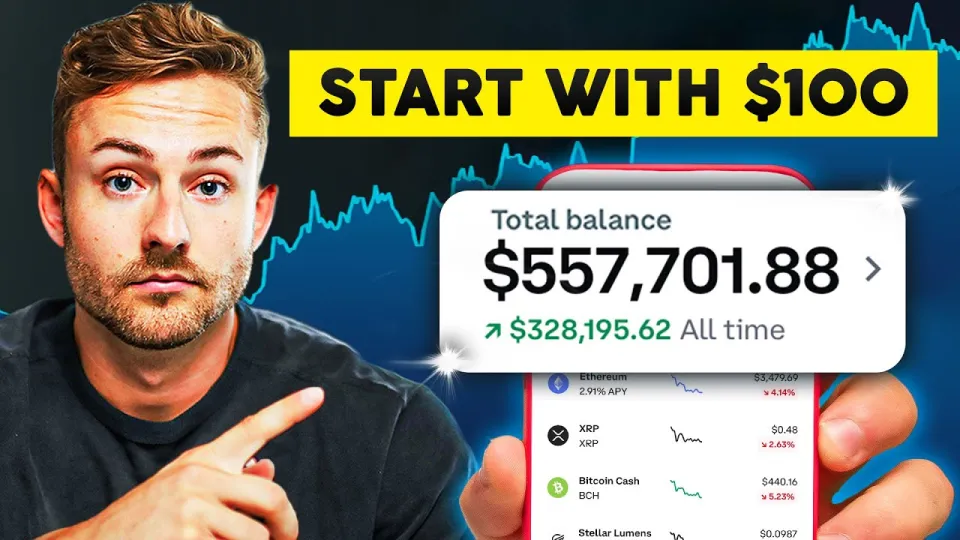
Video: How To Invest in Crypto as A COMPLETE Beginner [2025 GUIDE]
Want articles like this for your own video to promote it on YouTube and Google? Order them through the Telegram bot @sat_sit_bot. Articles with your video embedded are written and posted by the bot itself — on popular topical sites (no ads). Free trial — 50 articles.
Key takeaways
- Crypto is an emerging asset class where most retail traders lose money because they skip fundamentals and risk management.
- Start with Bitcoin and Ethereum, the two largest assets by market capitalization, before touching smaller altcoins.
- Never risk money you cannot afford to lose; position sizing and stop-losses matter more than picking the next big coin.
- Use a regulated exchange such as Coinbase or Bybit, enable two-factor authentication, and move long-term holdings to self-custody.
- Keep a trading journal and a written plan: most beginner losses come from impatience, not from bad coins.
Crypto investing for a complete beginner means buying a small, affordable amount of Bitcoin or Ethereum on a regulated exchange, learning the fundamentals behind the asset first, and only then expanding into altcoins with money you can afford to lose. The goal is not to get rich in a week but to build a repeatable process — research, position sizing, risk limits, record keeping — before you risk serious capital. A free starting point for learning the trading side is Craig Percoco's free trading education hub, which walks through charts and order flow from zero.
What crypto actually is and why beginners keep hearing about it
Cryptocurrency is a digital asset recorded on a blockchain, a public ledger maintained by thousands of computers instead of a single bank. Bitcoin, launched in 2009, was the first; Ethereum followed in 2015 and added smart contracts, which let developers build applications on top of the network. That is the whole technical premise you need on day one: a coin is a claim on a network's usage, security, and adoption, not a lottery ticket.
The reason crypto attracts so much attention is volatility and upside. A market that can move 10% in a day offers returns that traditional index funds cannot match, and the total crypto market capitalization has grown from effectively zero to trillions of dollars in under two decades. But the same volatility cuts both ways: drawdowns of 70–80% have happened repeatedly, and most short-term retail traders lose money. Treat crypto as a high-risk satellite of a portfolio, not as a replacement for savings, an emergency fund, or a retirement account.
The fundamentals to check before buying any coin
Fundamentals in crypto mean answering four questions about a project before you spend a dollar on it. First, what does the network actually do — payments, smart contracts, storage, or something with no real use case? Second, who is building it: a public team with a track record, or anonymous wallets? Third, what is the tokenomics — total supply, circulating supply, inflation schedule, and how much the team and early investors hold. A coin with a billion tokens unlocking over the next year faces constant sell pressure no matter how good the story is.
Fourth, check liquidity and listings. A token that trades only on one small exchange with thin volume can be impossible to exit at a fair price. Look at market capitalization rank, daily volume, and how long the project has survived at least one bear market. Bitcoin and Ethereum pass these tests easily; most of the thousands of altcoins do not, and the honest default assumption for a new token should be that it is a gamble until proven otherwise.
Reading a chart without pretending to be a professional trader
Technical analysis is simply the study of price and volume to decide when to buy and where to admit you were wrong. For a beginner, three tools cover 90% of what matters: support and resistance levels (prices where buyers or sellers repeatedly stepped in), the trend on higher timeframes such as the daily and weekly chart, and volume, which tells you whether a move has real participation behind it. A breakout on falling volume is usually a trap.
Avoid the trap of stacking ten indicators on a five-minute chart. Pick one trend measure and one momentum measure, define in advance what invalidates your idea, and place a stop-loss order at that level the moment you enter. If you cannot state your exit before you buy, you do not have a trade — you have a hope. Backtesting a simple rule on historical data, even by hand, teaches more than any paid signal group.
How beginners actually make money in crypto
There are three realistic paths, and they require very different temperaments. The first is long-term accumulation: buying Bitcoin or Ethereum on a schedule, holding through cycles, and ignoring daily noise. This suits people with jobs who cannot watch charts all day. The second is swing trading: holding a position for days to weeks around major levels, which requires patience and a written plan. The third is active day trading, which is a skill business with a long learning curve and where the majority of participants lose.
Whichever path you choose, position sizing decides survival. A common rule is to risk no more than 1–2% of your account on any single trade, so a string of ten losses costs you roughly 10–20% rather than everything. Take profits in stages, keep a reserve of stablecoins for better entries, and remember that the traders who compound are the ones who avoid the single catastrophic loss. Chasing small wins with oversized leverage is the fastest way to zero.
How to buy your first crypto safely
- Choose a regulated exchange with strong liquidity — Coinbase is the most beginner-friendly for fiat deposits, while Bybit is popular for derivatives and altcoin access.
- Complete identity verification and enable two-factor authentication with an app, not SMS.
- Fund the account with a bank transfer, which carries far lower fees than a credit card purchase.
- Buy a small first position in Bitcoin or Ethereum and place a limit order instead of a market order to control the price you pay.
- Move long-term holdings to a hardware wallet you control, keeping only trading capital on the exchange.
- Record every purchase: date, price, amount, and the reason you bought.
Beware of anyone promising guaranteed returns, doubling your deposit, or a private mentor who asks for funds upfront. Those are the most common scams in this space, and they target beginners precisely because the technology feels unfamiliar.
Common doubts beginners have before their first purchase
Skepticism is healthy and should be worked through with evidence rather than hype. Many people arrive worried that crypto is a scam in its entirety; the honest answer is that the technology is real, the asset class is volatile, and a large share of individual tokens are worthless. Separate the two: Bitcoin and Ethereum are established networks, while most new coins are experiments.
The second common doubt is whether you need a mentor or a paid course. Structure helps, but no course replaces screen time and a journal. The third is fear of buying at the top: this is solved by buying in tranches rather than all at once. The fourth is the belief that small capital cannot grow — in reality, small capital is exactly what you should learn with, because the lessons cost less.
All resources from the video
- Free trading education: https://bit.ly/3VHSOeT
- Crypto trading course and private team: https://bit.ly/3xhn47c
- Discord community access: https://bit.ly/3VmrO3r
- All resources: https://bit.ly/3zeM13u
- TradingView charting: https://bit.ly/3Xf9uvz
- Bybit exchange: https://partner.bybit.com/b/fortraders
The bottom line for a first-time crypto investor
Start small, start with Bitcoin or Ethereum, and treat the first year as paid education rather than a get-rich plan. Write down your rules for entries, exits, and maximum risk per trade, then follow them for at least a few months before increasing size. Keep records, review them monthly, and ignore anyone selling certainty in a market that has none. This breakdown was put together by Craig Percoco, whose channel covers trading psychology, technicals, and risk management in depth. If you want a structured starting point, begin with the free trading course and build your plan before your next deposit.
Questions & answers
How much money do I need to start investing in crypto?
You can start with as little as $20–$50 on most exchanges, and that is actually the right size for a first year. The point of small capital is to make mistakes cheaply while you learn position sizing and record keeping. Increase the amount only after you have followed a written plan consistently for several months.
Is crypto too risky if I have no experience?
It is high risk, but the risk is manageable if crypto stays a small slice of your portfolio and you never use borrowed money. Stick to the two largest assets first, avoid leverage, and keep an emergency fund outside crypto. Anyone promising guaranteed returns should be treated as a scam.
Do I need a mentor or a paid course to trade crypto?
No, but structure helps. Free resources, a demo account, and a trading journal will teach you the basics; a paid course is worth considering only once you know exactly which skill you are missing. Be skeptical of anyone who sells signals or asks you to send funds to a personal wallet.
Why do most beginners lose money in crypto?
The usual causes are no system, no patience, oversized positions, and no records to learn from. Traders often risk too much on a single idea, move stop-losses, or chase breakouts on thin volume. Fixing risk management alone improves results more than finding a better coin.
Source: How To Invest in Crypto as A COMPLETE Beginner [2025 GUIDE] · Markdown version